
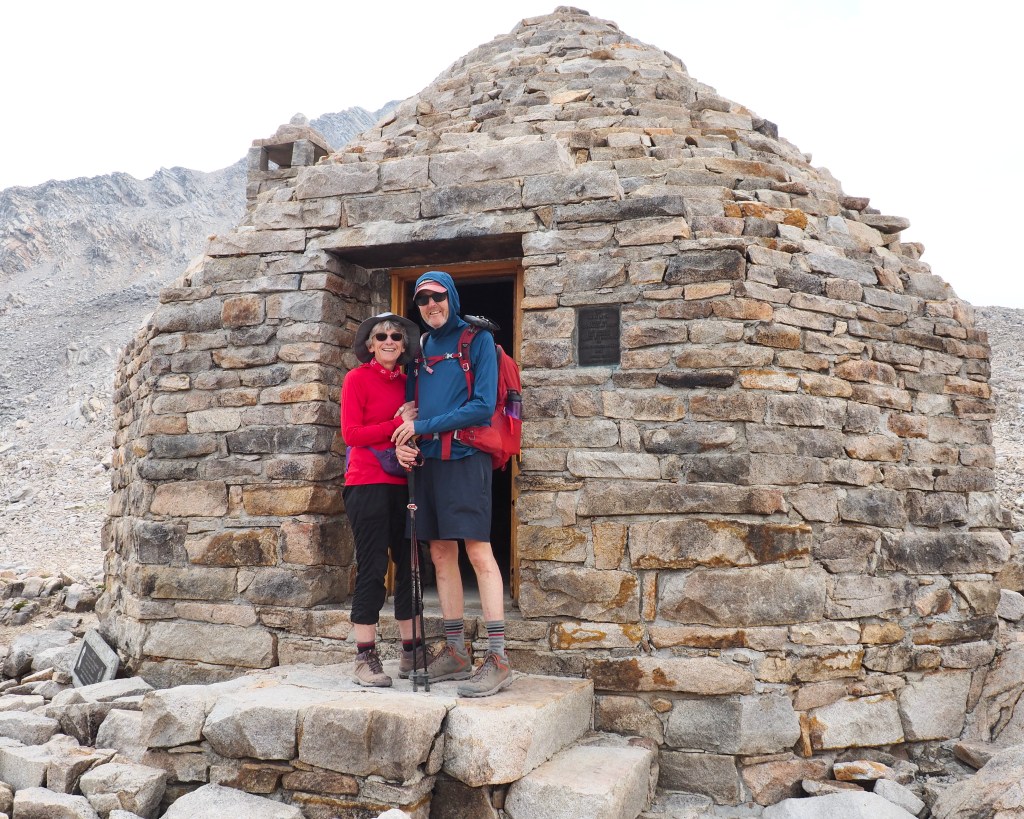
It was the toughest physical challenge of our lives. You just gotta see how it came to be. Click on the YouTube links below to watch Sue’s pair of brief (I promise) shows. Look carefully and you’ll see a mule train snake up Forester Pass at more than 13,000 feet.
It began with one word: “Never!”
Sue and I had just returned after our fifth European long-distance trek. Our youngest son Chris, an avid outdoorsman, had a suggestion that came from his heart: “You should do the John Muir Trail.”
“We can’t do that. Live in a tent? Carry all our stuff?”
I paused as the reasons for my absolute answer piled up. “The elevation would kill us. No toilets? No showers? Weeks in the wilderness?”
“It’s the most beautiful trail in the world, Dad.”
In August 2021, we began our JMT south of Mt. Whitney with a plan to walk 240-plus miles northbound to Happy Isles in Yosemite National Park. We sometimes gasped for oxygen, but we coped with living at mostly 10,000 feet-plus elevation. We bathed in creeks and lakes, filtered our own water. Set up and took down our tent every day for a month.
What made us say “Yes?” Mules and packers. Mules carried the bulk of our stuff, allowing us to get by with 20-pound daypacks, which held water, rain gear, lunch, snacks and a few other essentials. Packers loaded and unloaded the mules, cooked our food, and set up a rustic privy. And much more.
Here’s your ticket to the most beautiful trail in the world.
 Books and my backpack