My Pilgrimage to Homer Hickam’s and Rocket Boys’ Home

A few days ago, I completed my long-awaited pilgrimage to Coalwood, home to a fantastic coming-of-age adventure.

My drive through the West Virginia mountains on twisty, narrow roads was a journey I craved after reading Rocket Boys by Homer Hickam, whose father was the town’s coal mine superintendent. I passed dilapidated towns left behind by a dying coal industry.

A lump formed in my throat when I first saw the Coalwood sign and later, his former house. I am no Homer Hickam, but I shared some of his family struggles from my own childhood. Like Homer, somehow I persevered. I admire his accomplishments beyond measure.

During the late 1950s, Homer Hickam and five buddies joined the space race by firing 35 homemade rockets in a West Virginia field. They formed the Big Creek Missile Agency and defied Homer’s dad and many naysayers with their incredible victories, which ultimately won ribbons at the National Science Fair.

They all won college scholarships, which saved them from lives in the coal mine. And Homer, who wrote his memoir nearly 40 years later, realized his dream of becoming a NASA engineer.

When I stood next to the Space Shuttle marker, I imagined the scene at the field when Homer, then 17, fired off his most successful launch as a crowd of townspeople cheered. He turned around and saw a person he would never have expected to see: his father.

Jake Gyllenhaal, then 17, played Homer in the hit movie October Sky. Now in his 80s, Homer Hickam is working on what he calls an “equal” film.

Two earlier posts briefly introduce all four books Homer Hickam wrote about his remarkable life. Second post. First post. Many thanks to Sue, who captured our journey in pictures.

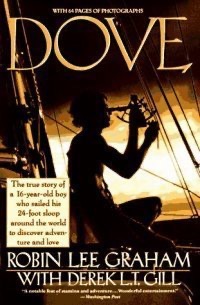
Come Aboard Dove for an Unforgettable Voyage

I begin with advice for parents: Don’t give Dove to your kid if you want him or her to live a life in one place, or even in one country.

And definitely hide the book unless you want to encourage youthful thoughts about adventures that pose life-threatening risks.
The kid in the book is now 75 and lives in Montana, but I wonder if he would have supported such an undertaking for either of his children.
Robin Lee Graham was 16–yes, just 16–when he sailed from California, westward in 1965, destined to become the youngest to sail around the world alone.

Many at the time questioned his father’s wisdom. What was he thinking? How could he let him go? I would ask those naysayers: What if his dad had tried to stop him?

His mother tried everything to block his trip, but his dad had sailed with Robin extensively and knew the journey may have been a huge risk for even the most experienced sailor, but he refused to squelch his son’s spirit for adventure and solitude.

Five years later, Robin returned a married man (still sailing solo, though), about to become a father, and was a global celebrity built by three major stories and photo spreads in National Geographic magazine. There were also countless stories about his journey by media outlets worldwide. Courage beyond belief, luck, emotion, dreams, naiveté, extreme loneliness, depression, and two (sometimes three) cats were his companions. Based on the numerous close calls Robin survived, maybe he was the one with nine lives.

If you follow my book reviews, you know I am a sucker for adventure stories. I love following people, young and old, who reject the comfort of their couches in favor of the hardships, uncertainty, and joys of traveling long distances on their feet, boat, bicycle, or other conveyance.

Dove is a great book. Robin wrote it along with Derek Gill, first publishing in 1972. It is based on the recordings he taped and sent home during his many stops along the way.

I will resist the temptation to tell you more. If you read Dove, you will be glad I stopped here.