Dune: Masterpiece or Beyond Boring?

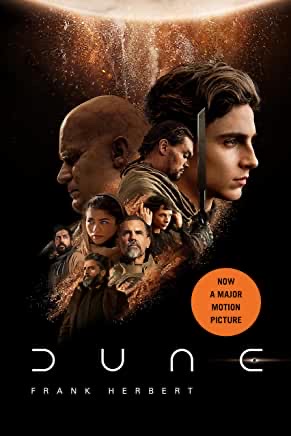
Is Frank Herbert’s Dune a timeless masterpiece or beyond boring?

The 1965 novel, often referred to as “soft” science fiction, is back among the bestsellers, thanks to the blockbuster 2021 movie. The book is the first of six novels that Herbert wrote. Devoted fans read the books over and over, but many say they find the reading tedious.

Set thousands of years in the future when humans have colonized other planets, the action takes place on Arrakis, a desert world with–of course–sand dunes and Melange, a spice that extends life and sharpens mental acuity. (Herbert had become familiar with sand dunes when he lived in Florence, Oregon.)

Giant sand worms protect the spice and Duke Leto Atreides and his family come to Arrakis to rule the valuable planet. His rival is Baron Harkonnen. Leto (and eventually his son Paul) enlists the help of the Fremen, desert natives. These are feudal societies and the weapons during duels are swords and knives, not lightsabers.

Back to the opening question. I found the book a chore to read, sometimes laden with cumbersome dialogue and narrative. Herbert created an intriguing planet in Arrakis, but some characters felt more than a world away from being people I cared much about. Highlights were Paul’s duels and the stories about his lifelong training to be a leader and the best fighter in the universe. The sand worms added excitement and I am looking forward to seeing how they are created in the film. For me, Dune was hardly ”beyond boring,” but not a masterpiece either.

I admit my science-fiction reading aptitude is below par. So, I say, give the book a chance if you haven’t already. It is worth the journey and if you are a sci-fi aficionado, you have likely read the entire series more than once. For the rest of us, it might help to refer to a synopsis occasionally to avoid getting lost.

Now, on to the new film, streaming for $25. Will it be better than the book?

Book of the Year: The Winner Is…

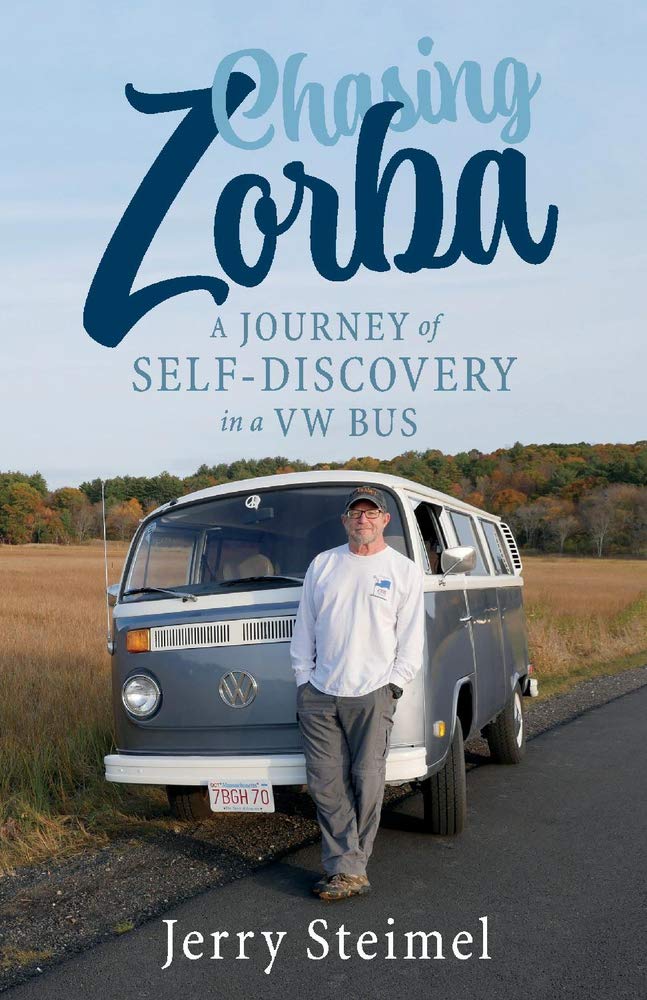
I have read many good books in 2021, but Jerry Steimel’s Chasing Zorba jumped out at me for my book of the year. You will enjoy getting to know Jerry and his journey will intrigue you on several levels.

Oh, by the way, one follower of this blog found the answer to my find-the-book challenge within minutes. Well done, Jeff.

I am pleased to republish my discussion about Chasing Zorba below.

In 1972, Jerry Steimel graduated college, jumped in a VW Beetle with his lifelong friend, and set out to live his dream, a cross-country trip to California. But his VW Bug had other ideas, quickly ending the trip with mechanical breakdown.

Steimel’s dream wasn’t deterred. Forty-five years later, he jumped in another Volkswagen, a 1973 air-cooled van, and set out from his home in Massachusetts for another try, this time solo. But Jerry Steimel hardly traveled alone.

In Chasing Zorba: A Journey of Self-Discovery in a VW Bus, he is guided by author Nikos Kazantzakis and his book, Report to Greco, whose life lessons begin each chapter. He names his van Zorba after Kazantzakis’ book Zorba the Greek. Steimel’s goal: California. And so much more.

Some call his plan lunacy. But Steimel is out to discover comfort in taking risks rather than living as if he is just waiting to die. He doesn’t hurry, neither in his writing nor his driving, and his literary and physical journeys are a meander. But, in the end, the book rushes up and grabs readers before leaving them with memories anchored in what it means to live life to its fullest.

Steimel goes to great lengths to find places, like the West Virginia site where four high school boys launched rockets and their lives to heights beyond their wildest dreams. It is the site of the film October Sky, which Steimel watched a dozen times. That figures, you see, because Jerry devoted 45 years to social work, lifting kids who needed an extra push.

Steimel weaves places and American history with the people he meets as he drives mostly back roads, having to stop more than now and then to take Zorba to mechanics for adjustments. The journey tests Steimel and Zorba in ways they could never have anticipated.

The author and his VW Bus still miss the turn of the key every morning. And I miss wondering what is around their next turn.