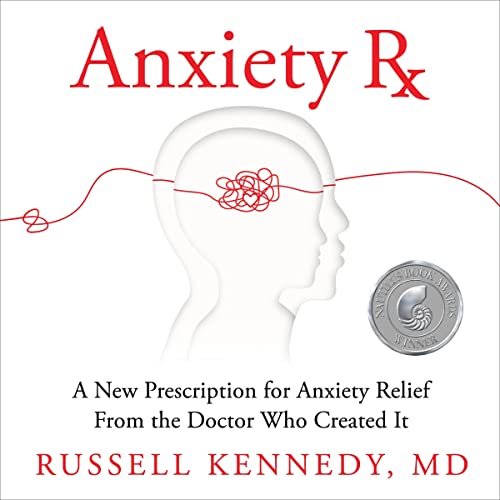
Anxiety RX: A Powerful Prescription for Healing Your Worries

Put your worrying mind aside and read Anxiety Rx by Russell Kennedy. If you are like me, you will be a changed person long before you read the last page.

Kennedy is a doctor, neuroscientist, developmental psychologist and a professional stand-up comedian, but his words on these pages are no joke.

I highlighted quotes that caused me to stop, ponder, go back, and read again. One stood out:

“I can tell you from personal experience that believing we will be healed by some doctor, treatment, supplement, patch, drug, psychedelic, guided meditation, yoga nidra, hypnosis, meditation, or therapy is a fool’s errand.”

He is not against these strategies, though. He has tried many of them himself. So what does he propose? He writes that you can best heal anxiety by finding its source: your body, not your mind. When you find yourself in “alarm,” or worrying, go directly to your body, find where the alarm is. Kennedy proposes embracing the child in us. The child who was scarred. He describes a series of methods to connect with the places where our bodies feel the worry and heal the old wounds by being kind to ourselves.

“The leap of faith comes when your adult self opens the chest, pulls out your innocent child self, and fully accepts, embraces, and loves them,” he advises.

The cure is not easy, Kennedy writes. Worry is an addiction, “rewarding you with dopamine each time you do it.” But regular attention to the alarm in your body is the best way out.

Some readers might criticize Anxiety Rx for being repetitive, but I found that quality to be a strength.

Kennedy’s story is personal. His father lived a life of mental illness, eventually committing suicide. The author carries guilt about how he used to feel embarrassed by his dad.

Feel free to share your thoughts about his book here.
What Happened to Ranger Randy Morgenson?

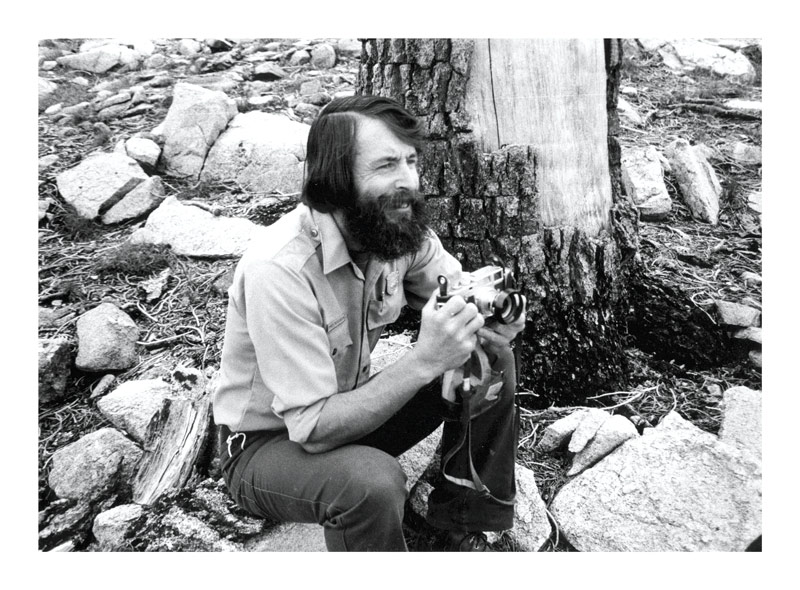
Randy Morgenson had spent 28 summers as a ranger in the wilderness of Sequoia/Kings Canyon National Parks. A passionate protector of his beloved lands, he had become perhaps the most celebrated ranger in the Sierra Nevada.

He grew up in neighboring Yosemite, where his father Dana was a sought-after guide and naturalist. Photographer Ansel Adams was a family friend and gave Randy his first camera when he was a boy.

In July 1996, Randy Morgenson left his ranger cabin for the backcountry. It was normal for rangers to go on patrol for up to several days at a time and Randy was known to clean up illegal campsites and transport trash back to his station. It was also expected that he would check in via radio with the central ranger office every day.

This time, his colleagues became concerned after he was not heard from for several days, triggering a massive wilderness search that failed to find him.

What happened to Randy Morgenson?

Had he been injured, unable to return to his ranger station? Had his radio failed?

Or had he been murdered by unhappy park visitors he had dealt just days before his disappearance?

Had he climbed to a remote place and killed himself? Some said he had been particularly dejected in recent days, even weeks. He carried divorce papers his wife had presented.

Or did he leave the parks to begin a new life, perhaps in South America?

In The Last Season, Eric Blehm, after eight years of research, interviews, and treks in the country Randy explored, answers the questions. His book is a exhaustive narrative about the search and about Randy’s life, mixed with family history, the roles of rangers, and much more.

The book may have been better with less detail, but there was plenty of compelling storytelling to carry me to the end. Those who love the Sierra wilderness will be enthralled. Those who admire the work of wilderness rangers will gain new respect, especially for one who gave it all for the love of his life.