
For me, life without adventure is not life at all.
As I near my 70th year, I seek even more exhilarating experiences, whether backpacking the long-distance trails of Europe or exploring the trails and bikeways of the USA while traveling in a small travel trailer.
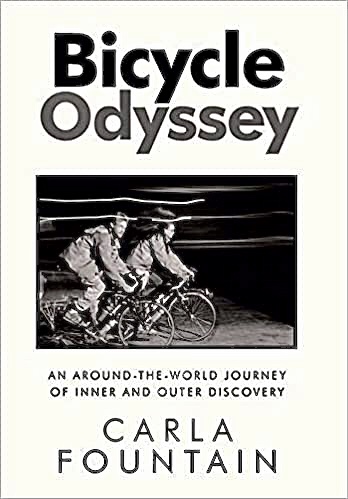
When I can’t get out there, I pursue adventure through reading about others’ experiences. Bicycle Odyssey took me on the trip of a lifetime.
Consider what author Carla Fountain and her husband Dermot accomplished in a year. Planes, trains and buses transported them and their bicycles to the United Kingdom, continental Europe, Kenya, Uganda, Thailand, Vietnam, India, Bali, and many more places. They rode in weather and situations that would keep most of us indoors.
The American couple quit their teaching jobs so they could spend the night in a tent while hippos shook the ground around them. They snorkeled off the Kenyan coast. They survived the dangerous roads of India, where truck drivers honked rather than move over. They confronted their fears with courage.
Fountain uses her journal to recreate the 1991 journey and her story comes from her heart. Her account feels fresh, brought to life through recreated conversations and fascinating details about cultural experiences. Her adventure causes Fountain to re-evaluate her life, including her marriage. She is introspective in a relatable way.
As much as I feel compelled to tackle risky experiences, I doubt I will come close to an adventure like Fountain’s. However, her story inspires me to stretch the boundaries of my life.

 Books and my backpack