

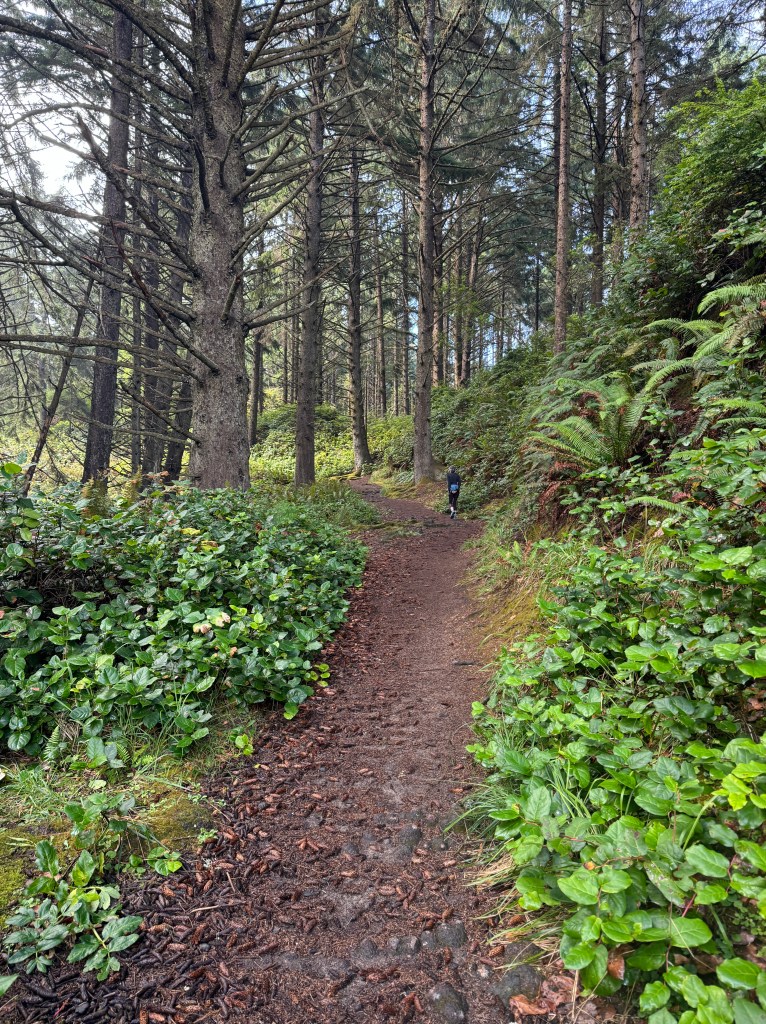

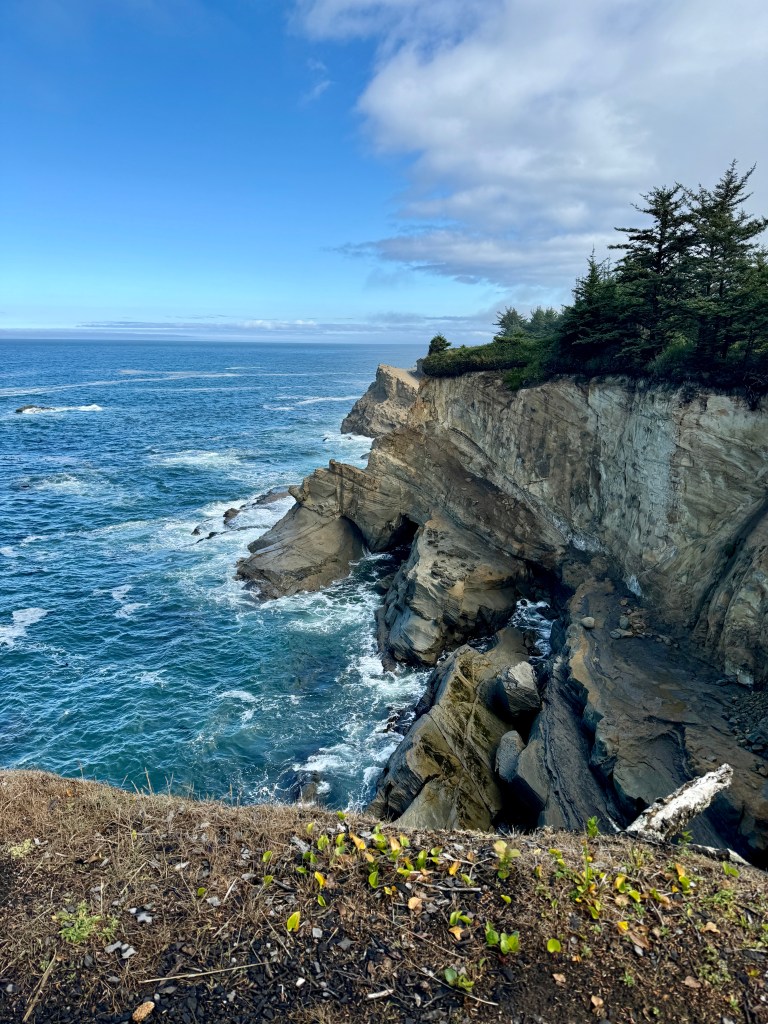
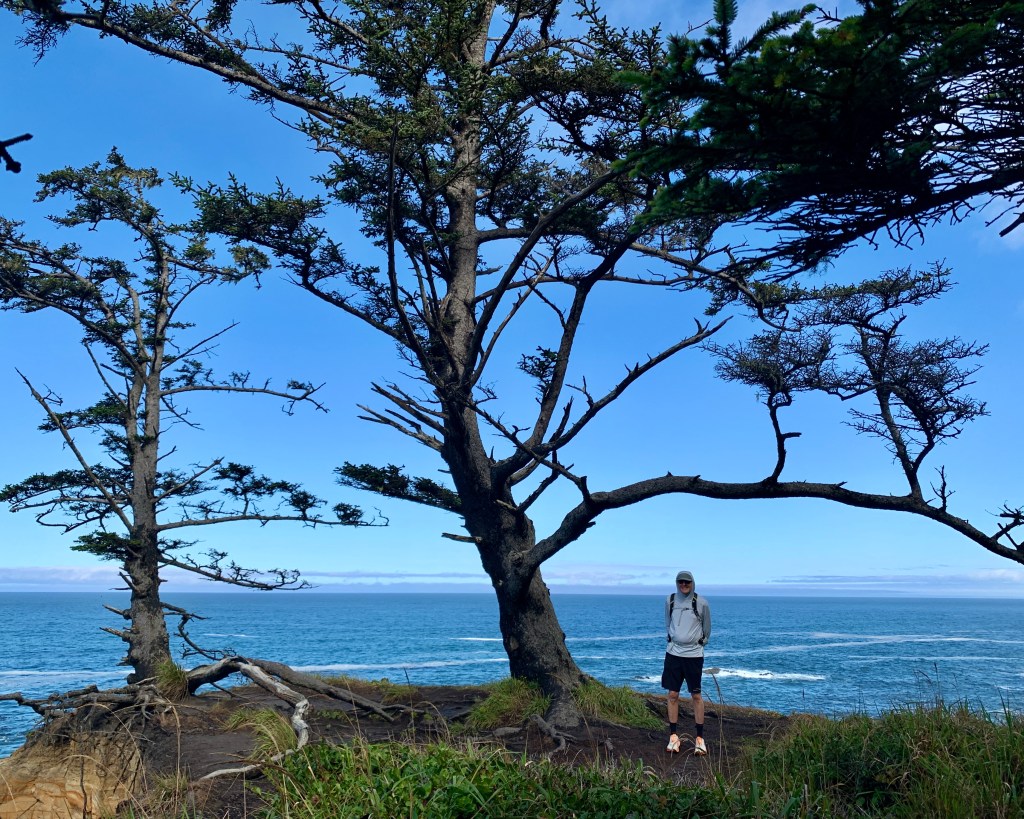
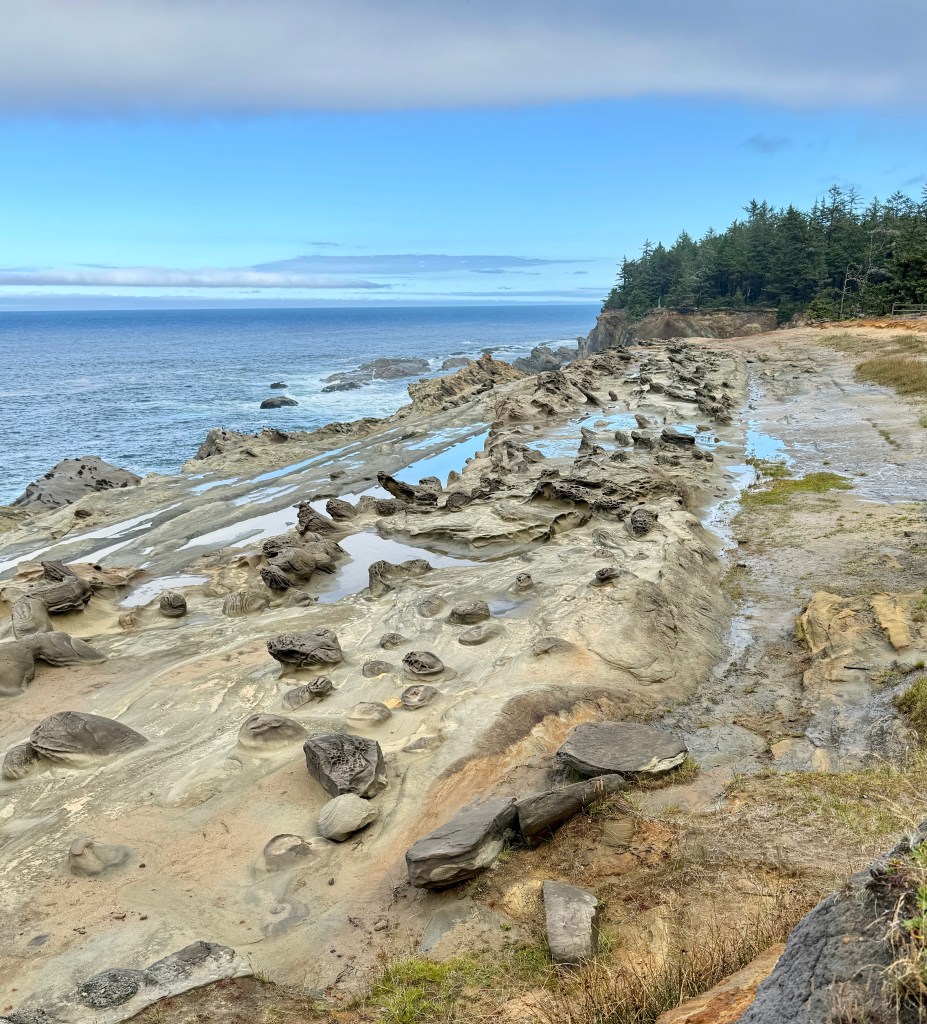
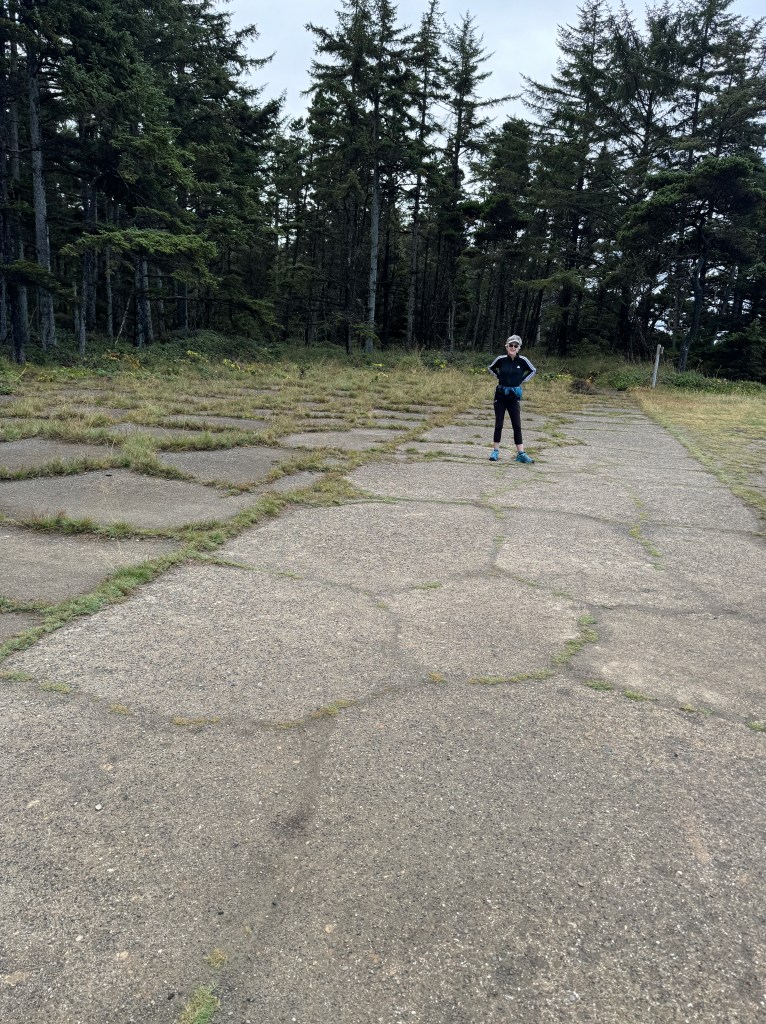

The Oregon Coast Trail follows one of America’s most spectacular coastlines. Sue and I have a favorite section, and it is easily accessible near Coos Bay, and our recent walk began at the beach opposite Sunset Bay State Park. We caught the trail just beyond a basketball court, where it climbs to follow bluffs for nearly five miles to Cape Arago State Park.
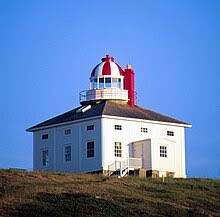
After a mile or so, the Cape Arago Lighthouse appears in the distance. Midway, at Shore Acres, there is a bluff-top room with history exhibits and large windows to view gray whales. It graces the site of a mansion built by timber tycoon Louis J. Simpson in 1908; it featured a Roman bath, swimming pool, ballroom, tennis courts, and nine guest rooms. A 1921 fire destroyed the mansion and it was rebuilt, only to fall into disrepair during the Depression.
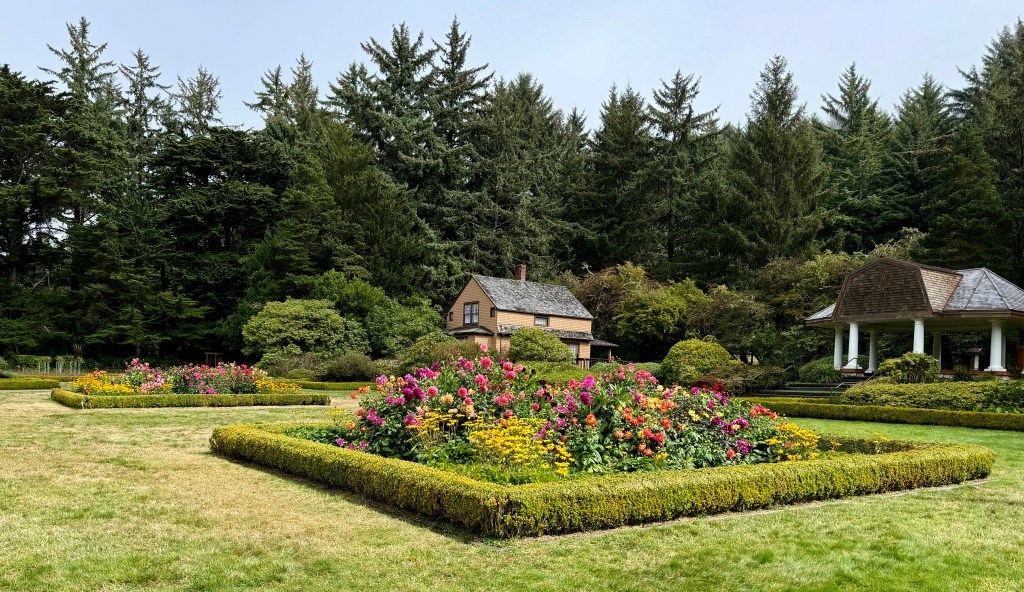
The state of Oregon now owns the land and has restored the nearby garden (free admission), which is almost always in bloom with a variety of plants from around the world. A beautiful pond and rose garden may make it difficult to remember you are on a day hike. Shore Acres is home to a spectacular light display every Christmas season.
The second half of the walk leads to Simpson Reef, where a viewpoint offers the sounds and sights of seals, sea lions, and shorebirds, all part of the Oregon Islands National Wildlife Refuge. You can turn around here, or continue along the road to Cape Arago, where a path leads downhill to closeup views of sea animals. Several picnic tables beckon below the path and offer–you guessed it–eye-catching views.
We have walked the Sunset Beach-to-Cape Arago path often during our ten years living in Oregon. Sometimes sunshine warms us, sometimes fog chills us, sometimes wind buffets us. Regardless, the path always rewards us.


 Books and my backpack