What if the Los Angeles Times had not tailored its coverage to promote Richard Nixon? Would Red-baiter Joseph McCarthy have been exposed without the work of Ed Murrow of CBS? And what if the Washington Post had not pursued the truth behind the Watergate break-in?
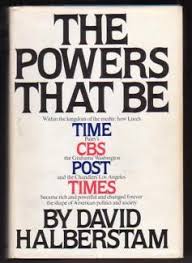
In The Powers That Be, David Halberstam weaves stories of intrigue about the rise of media giants in the mid-20th century to become powerful forces, not just vehicles that transported the news. History and journalism buffs will eagerly turn the story’s pages, and there are plenty of them. But it went fast for me. It was published in 1979 and I am embarrassed to admit I had not read it until recently, even though I was a newspaper journalist for many years.
Halberstam, winner of the Pulitzer Prize in 1964 for his Vietnam War coverage, focuses on personalities and companies while describing revelations that will make your jaw drop. The Los Angeles Times, Washington Post, Time Magazine, and CBS News are his focus.
Halberstam, who as a New York Times reporter raised the ire of John F. Kennedy, was a prolific author. Other works include The Fifties and The Best and the Brightest, two I highly recommend. If you are a baseball fan, you will love The Teammates: A Portrait of a Friendship, about several members of the Boston Red Sox.
Halberstam’s life ended in 2007 at age 73 when a college student driving him to an interview turned into oncoming traffic. If only Halberstam had had the chance to write about the rise and influence of the internet, social media, cable TV, and the 24/7 news cycle. The Powers That Be 2 would be the talk of the nation.
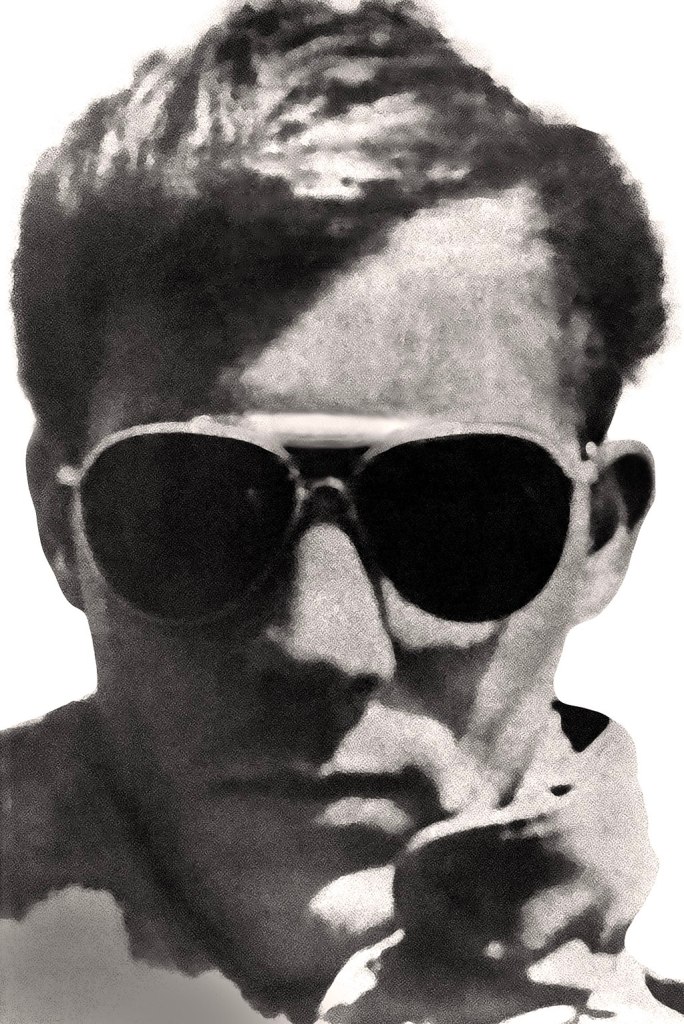
American politics got you down, angry, stressed? Then turn off your television set and read Fear and Loathing on the Campaign Trail ’72. You may never go back to TV “news” after reading author Hunter S. Thompson’s unparalleled examination of the American democratic process.
The book, serialized in Rolling Stone, may not make you more optimistic about how things work, but Thompson’s honest, witty, and insightful perspective entertains and informs like no other journalist has ever done. He founded the gonzo journalism movement, in which he thrust himself into stories as a player and came out with truths that “objective” news people missed.
Fear and Loathing begins with the Democratic Party race in 1971 and transports readers through the primaries, both parties’ conventions, the 1972 general election campaign, and post-campaign analysis. But hold onto your seat. Thompson’s writing, like his life, is a wild ride, full of emotion, booze, drugs, and cigarettes mixed with his hard-earned access to the powerful.
Like many of the current crop of media personalities, Thompson was opinionated. He called President Richard Nixon a “swine” and wrote that Nixon exemplified the “dark, venal, and incurably violent side of the American character.” He supports the eventual Democratic nominee, George McGovern, but when the South Dakota senator fumbles his nomination of running mate Thomas Eagleton, Thompson dissects how McGovern and his campaign screwed up.
Fear and Loathing will put you in the passenger seat as Thompson steers you through the McGovern campaign’s precocious strategy at the Democratic convention during a critical vote just before McGovern won the nomination. Then, at the Republican convention, the gonzo journalist, wearing a Nixon hat and a large McGovern button, joined hundreds of Young Republicans as they paraded onto the convention floor. Why did he do it? I’ll let you find out for yourself.
Thompson’s analysis of why McGovern lost the election to Nixon in a landslide offers perspectives that the Democratic Party’s campaign missed. His post-election interview with McGovern rewards readers toward the end of the 500-plus page book.
Perhaps Thompson’s calling was to be a campaign strategist. Or maybe a candidate. He did run for sheriff of Pilkin County, Colorado on the Freak Power ticket and lost a close vote.
Thompson was an enigma, as mysterious as he was direct. His novel, Fear and Loathing in Las Vegas, illustrates how the 1960s counterculture movement failed. This by a man who served in the Air Force and had a lifelong interest in guns. He spent a year living and riding with the Hell’s Angels, then wrote a book named after the group.
Consider these words from Thompson: “Life should not be a journey to the grave with the intention of arriving safely in a pretty and well preserved body, but rather to skid broadside in a cloud of smoke, thoroughly used up, totally worn out, and loudly proclaiming, ‘What a ride!’ “
In 2005, Hunter S. Thompson died by a self-inflicted gunshot. As he wished, his ashes were fired by a cannon in a $3 million funeral financed by his close friend, Johnny Depp.
The 1972 election was my first vote, thanks to the lowering of the voting age from 21 to 18. As a college political science major who came of age during the 1960s, the election left me dispirited about American politics. As dark as Hunter S. Thompson’s words can be, his analysis offers hope if new blood excites the electorate enough to throw out the old guard and the old ways.



 Books and my backpack