
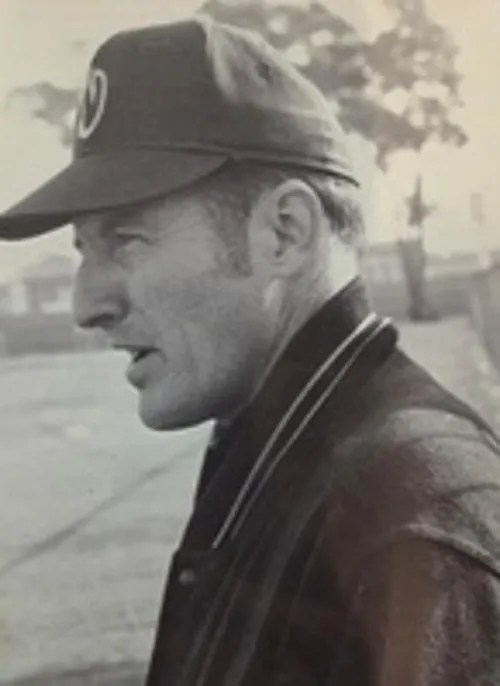
“Here you go, Reg.” Coach handed me the baseball scorebook. “The directions are inside the cover. If you need them.”
Need them? I couldn’t even understand most of the book’s first two pages, which were filled with rows and columns of diamond-shaped basepaths, each representing a player’s at-bat. But Bill Riggs was depending on me to figure it out during the varsity season opener at Oxnard High School in California.
Coach had recruited me to be the team manager, a job reserved for the school’s nerdiest kid. But he treated me like I was one of his biggest stars. Kindness, humor, and respect were his mantra.
I had no idea that the opportunity he handed me that spring day would change my life.
Barely 30 minutes before the first pitch, I climbed the bleachers, scorebook in hand. I spotted a short, middle-aged guy who held a pencil—and a book identical to the one I carried.
I had struck gold.
Bill Clark was a sports writer for the Oxnard Press-Courier and encouraged me to copy his marks as he explained that F-9 meant a fly ball caught by the right fielder. Like my coach, he quickly won my admiration and appreciation.
After the last out, I handed the scorebook to Coach Riggs. He opened it and scanned my work.
”Looks like you knew what you were doin’.” He patted my shoulder. “I saw you sat by Bill Clark.”
I looked Bill Riggs in the eye. “He offered me a job at the newspaper. I start Friday!”
That day began my 20-plus-year career in journalism, my backup job to 31 years as an educator.
Bill Riggs died on New Year’s Day, 2026. He was 95 years old. I am 73 now and tears flow as I remember a great man who touched my life in more ways than he ever knew, with a major assist from another Bill.
 Books and my backpack