Gary Paulsen Pens a Masterpiece Adventure

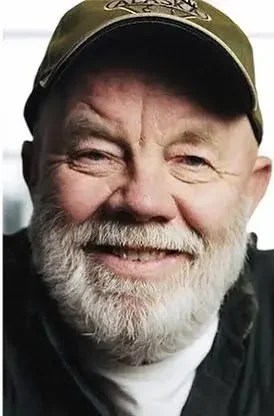
There has been no better storyteller than the late Gary Paulsen, author of 200 books and best known for the adventure survival masterpiece Hatchet, the basis of a motion picture set in the Alaskan wilderness.

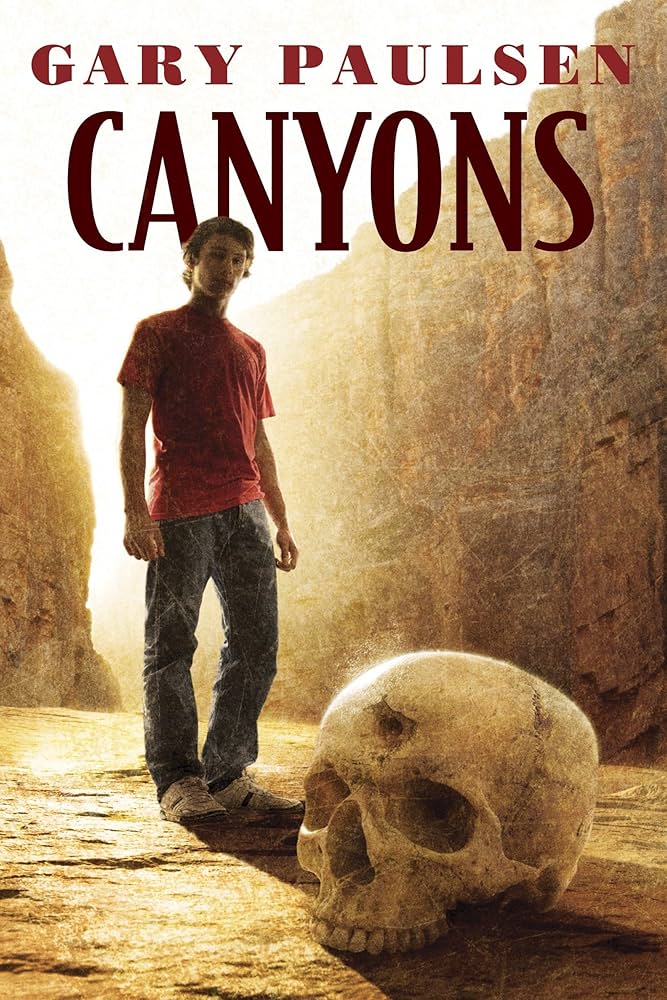
Canyons may be his best book, though. It is a story of two youths’ paths to manhood, separated by more than a hundred years, but bound by an extraordinary commitment to find closure.

Coyote Runs is a 14-year-old Apache warrior; Brennan Cole, 15, lives in New Mexico, near the canyons that Coyote Runs knows well. In 1864, during a horse raid across the Mexican border to prove his manhood, Coyote Runs is chased for days back to New Mexico, finally wounded in his leg by a rifle shot that kills his horse. He drags himself up a sandy slope and hides under a rock outcropping, depending on his spirit protector. But a bloody trail leads the Cavalry to the boy, who watches the end a rifle barrel find his forehead.

A century later, Brennan, his mom, her boyfriend, and eight pesky eight-year-old boys are camping in a New Mexico canyon. Seeking quiet and privacy, Brennan pulls his sleeping bag up a sandy slope and unfurls it under a rock outcropping. He crawls into his bag, so ready for rest.

”What’s that?” he thinks. He sits up, digs under the sand and finds a round rock—no, it is a skull. There is a hole in the skull just above the eyes and a much bigger void in the back.

Thus begins Brennan’s quest and he will not–no matter the roadblocks and consequences–quit until he discovers who died in that canyon and brings closure to the boy’s spirit, whose words guide him.

This week, I returned to Canyons, which I had read to my sons and to hundreds of students. It didn’t matter that I knew the spellbinding conclusion. Like all those times, my heart hung on Gary Paulsen’s every word.

Gary Paulsen: Gone, But His Voice Lives

It was “like peeling an onion.”

Gary Paulsen used those words to describe how he felt while writing his memoir, Gone to the Woods: Surviving a Lost Childhood.

Author of more than 200 books, mostly aimed at children aged 10 and up, Paulsen wrote the gut-wrenching childhood story that was published shortly before he died of cardiac arrest in October 2021.

Gone.

To live, in 1944, at just five years old, with relatives on their Minnesota farm to escape his alcoholic mother who had made him sing in Chicago bars.

Gone.

At age seven, to the Philippines, where he witnessed grisly living conditions and killings that would haunt any adult, while living with his parents. Both of them alcoholics. His father served there during World War II.

Gone.

Would describe a teenager who looked for ways to escape his life with his parents back in the USA. Gone to the woods, where he learned to hunt and trap his own food. Gone to the library, where he learned to love books thanks to a librarian whom he at first suspected might be like other kids and adults in his life: Up to no good. But that librarian came to know him without many words passing between them. Her gift of a spiral notebook and a yellow Number Two pencil changed his life.

In his memoir, Paulsen talks about himself in the third person. Is it to keep emotional distance from himself (“I”) and ”the boy,” which he uses throughout the book?

Gone.

But a voice I still hear. His most famous work, Hatchet, about Brian, a youth who survives by himself in the Alaskan wilderness after a plane crash, was one of my favorites to read aloud in class to my sixth-graders and to my sons as they sat next to me on the couch where we shared other Paulsen books. The book moved me, enthralled me. Newbery Medal judges chose it as a most cherished book, one of three Newbery honors he won.

As an adult, Paulsen lived a life filled with his awe for nature. He sailed, hiked, explored, even entered the Iditarod three times, completing it once.

Through his characters and stories, Paulsen taught millions of kids (and more than a few adults) life lessons. In Hatchet, Brian remembers that the tears he shed during the hard times he endured had taught him “the most important rule for survival, which was that feeling sorry for yourself didn’t work.”

Not gone.

Gary Paulsen’s characters, lessons, and the growing 35 million copies of his beloved books will be around for a long, long time.