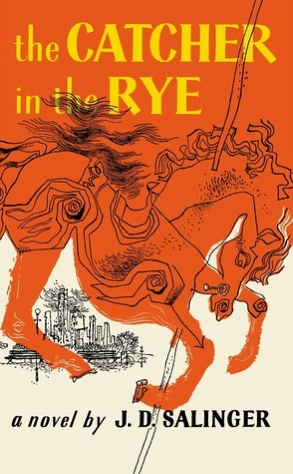
Catcher in the Rye: Holden Caulfield’s Voice Resonates

A5DDACA2-791F-4C62-9026-86933D4A7ADE_4_5005_c

Holden Caulfield’s voice as the protagonist in Catcher in the Rye is the masterful creation of J.D. Salinger, a man who often wanted to be left alone.

The words of the 17-year-old New Yorker take readers on a journey that feels so real we can all get lost in his world. Having flunked out of a boarding school for boys, Holden is isolated by depression, a distrust of shallow people, and vulgar language. He is more sensitive than he admits, still mourns the death of his brother Allie, and adores his younger sister Phoebe. He has not found a fit in four private schools.

The book’s first sentence sets the tone for Holden Caulfield’s story:

“If you really want to hear about it, the first thing you’ll probably want to know is where I was born, and what my lousy childhood was like, and how my parents were occupied and all before they had me, and all that David Copperfield kind of crap, but I don’t feel like going into it, if you want to know the truth.”

Salinger’s most famous book, set in the 1950s, was written for adults, but it remains a favorite of youth, selling hundreds of thousands of copies a year. Its popular use in high schools has gotten teachers in trouble for its themes of morality, violence, sex, underage drinking, mental health.

Most of us had a Holden Caulfield in us. Ferris Bueller did. Many of us still do.

Five decades after I first read Catcher in the Rye, Holden Caulfield’s words make me laugh, make me sad, make me want to tell him to be kinder to himself. And, sometimes, to others.

I can still learn a thing or two from Holden Caulfield–and I’m not just saying that.
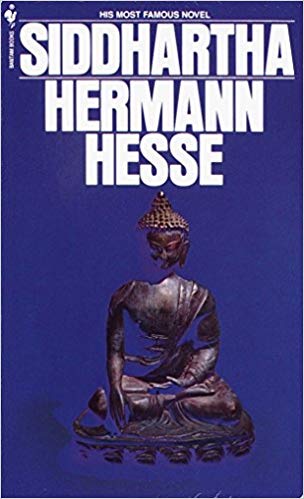
 

Siddhartha: A Search for Fulfillment

Siddhartha is a handsome young Brahman who is wealthy, exceptionally intelligent, and loved. He seems to have it all, but he feels unfulfilled.

With his loving friend Govinda, he leaves his family and the comforts of home in search of enlightenment. He meets Gautama, but even life with the original Buddha is not enough, so he moves on, leaving Govinda behind. He fasts, lives without possessions, eventually slips back into materialism and a life with a beautiful woman.

As an old man living alone and working as a ferryman at a river, he reconnects with Govinda in a poignant meeting. Is Siddhartha, alas, fulfilled?

Siddhartha is German author’s Hermann Hesse’s most famous book. Hesse, who died in 1962 at 85, so beautifully describes Siddhartha’s journey that many readers return to the book. The conversations with people he meets are compelling and the narrative, originally written in German, is deeply human.

Each time I read Siddhartha, I find myself reading passages over and over. It resonated with me as a youth in the 1960s and it touches me as a man now in my late 60s. Messages of hope and beauty emerge from the book’s shadows.

Siddhartha mirrors aspects of Hesse’s own life of discontent. The author suffered depression as a child, attended a seminary, where he rebelled and fled. He attempted suicide at 15.

I devoured all of Hesse’s novels while I was in college in the early 1970s. Siddhartha was my favorite, but I was also drawn to Narcissus and Goldmund and Peter Camenzind. Click on the book cover above to go to Amazon.

Is there a Siddhartha in all of us?