My Pilgrimage to Homer Hickam’s and Rocket Boys’ Home

A few days ago, I completed my long-awaited pilgrimage to Coalwood, home to a fantastic coming-of-age adventure.

My drive through the West Virginia mountains on twisty, narrow roads was a journey I craved after reading Rocket Boys by Homer Hickam, whose father was the town’s coal mine superintendent. I passed dilapidated towns left behind by a dying coal industry.

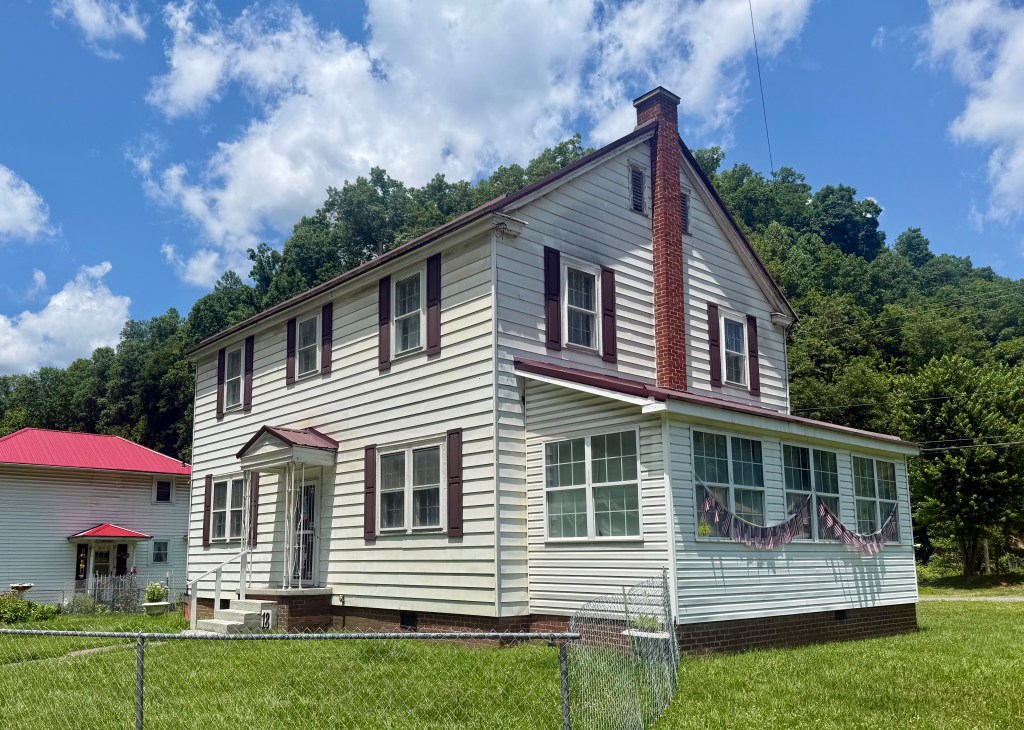
A lump formed in my throat when I first saw the Coalwood sign and later, his former house. I am no Homer Hickam, but I shared some of his family struggles from my own childhood. Like Homer, somehow I persevered. I admire his accomplishments beyond measure.

During the late 1950s, Homer Hickam and five buddies joined the space race by firing 35 homemade rockets in a West Virginia field. They formed the Big Creek Missile Agency and defied Homer’s dad and many naysayers with their incredible victories, which ultimately won ribbons at the National Science Fair.

They all won college scholarships, which saved them from lives in the coal mine. And Homer, who wrote his memoir nearly 40 years later, realized his dream of becoming a NASA engineer.

When I stood next to the Space Shuttle marker, I imagined the scene at the field when Homer, then 17, fired off his most successful launch as a crowd of townspeople cheered. He turned around and saw a person he would never have expected to see: his father.

Jake Gyllenhaal, then 17, played Homer in the hit movie October Sky. Now in his 80s, Homer Hickam is working on what he calls an “equal” film.

Two earlier posts briefly introduce all four books Homer Hickam wrote about his remarkable life. Second post. First post. Many thanks to Sue, who captured our journey in pictures.

An 8,000-Mile Quest Against Time and Distance

As you begin Free Outside, prepare for a story about one of America’s greatest trekking accomplishments.

In 2016, Jeff Garmire, 25, set out to become the youngest person to complete the 8,000-mile Triple Crown of distance trekking in a calendar year, a feat accomplished only four times before.

Remarkably, he never skipped sections to take advantage of better weather by returning to the skipped parts later. He stayed on each trail through its end. His first was the 2,190-mile Appalachian Trail. As he neared the end in Maine, after miles and miles in deep snow, he faced a raging river. He was not about to give up his quest, so he stripped naked and plunged in.

He describes his ordeal:

”The current grabbed hold, moving quicker than my mind could think…I screamed in desperation and my body lost all sensation. I moved motionless downstream, strapped to a 30-pound pack. I was helpless.”

I became increasingly drawn to his narrative as he describes his next challenge, the Pacific Crest Trail, 2,650 miles, northbound. It was his favorite path and he writes that the snowy 200 miles through the Sierra Nevada was the most beautiful section of the Crown. He averaged 33 miles a day; his longest in one day was 52 miles in California.

The 3,100-mile Continental Divide Trail, the least traveled of the three, gave him challenges that would bring mortals to their knees as he walked southbound from Montana’s border with Canada to New Mexico and the Mexican border. He often had to drink from water sources that cattle had used for their bathrooms. His filter left the water brown, tasting like you-know-what.

How many pairs of trail runners did he go through during the Triple Crown? Thirteen. How many rest (zero) days did he take over 244 days? None.

In a way, the Triple Crown was a beginning. In 2018, Garmire, raised in the Pacific Northwest, became the second person to complete the 6,875-mile Great Western Loop through nine western states on five distance trails, including repeat journeys on the PCT and CDT. 

How many miles has he walked on distance trails? More than 30,000.

You may ask why.

It is his antidote for his lifelong battle with depression and his frustration with the routines of the working world. He basks in the simplicity of life with a backpack. He dedicates himself to promoting suicide prevention. He endures pain and hardships that would halt most of us. He thrives on meeting people on the trails, but walks so fast that he soon leaves them behind.

Ultimately, his quests come down to this: Outside, Jeff Garmire feels free.