Injury Trips Up French Camino — For Now

Our Via Podiensis walk has been derailed by my achilles injury, which hit during the second day of steep, 1,500-foot descents. Seven distance treks and nearly 2,000 miles of injury-free backpacking ended with a limp into our convent-hotel in Saint Come d’Olt.

The next morning, we taxied to the charming, riverside village of Estaing, where Sue found a pharmacie and a brace designed for achilles injuries. Not knowing which size I needed, I sought help at the counter. Next thing I knew, I was sitting in a room, where the woman from behind the counter measured my ankle and helped me pull the extra-tight brace over my heel. Then she pantomimed how I would walk if I didn’t use supports under both heals. We all laughed and, once again, we benefitted from the professional help we would not expect in most American pharmacies.

The brace eased the pain, then our day became even more memorable when we ran into Joy and JR from New Hampshire, whom we had gotten to know over dinner several days before. More laughs and stories followed over lunch.

My achilles is gradually healing (with Aleve) and we hope we can get back on the trail after our rest day in Conques.

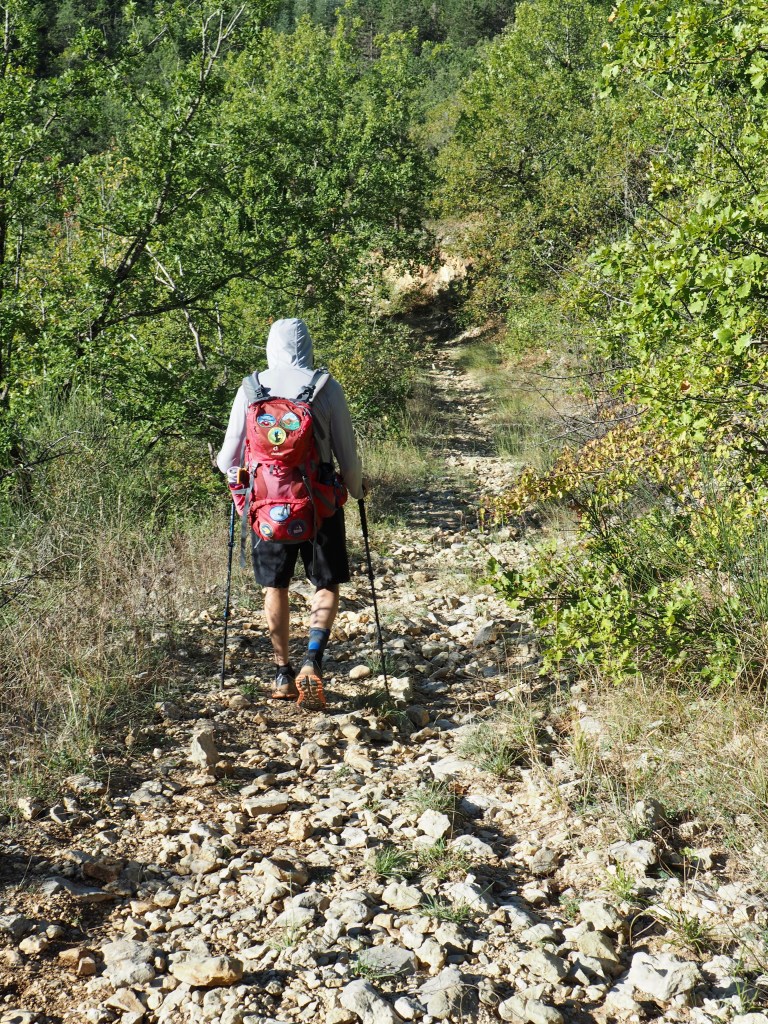
The French Camino: The First 8 Days

Greetings from France’s Via Podiensis, a nearly 500-mile pilgrimage from Le Puy to St. Jean Pied de Port in the Pyrenees Mountains.

Eight days out of 42 now behind us, a roundup of happenings:

The stats: Guru Pro says we have come 129 miles (including some sidetrips) and have climbed 13,199 feet.

The place: The High Elevation Massif Central, undulating between 2,500 and 4,500 feet.

The weather: Hot! Highs between 85 and 95.

The land: Dense forests, ranches (cattle and sheep), farms.

The people: Lots! Each morning is a stampede out of villages, reminding me of the crowds on the Camino de Santiago during the final 100 kilometers. The crowds are supposed to thin considerably in a few days. We have met no one planning to walk the entire way. Most are here for five or six days. We hear that this is the most popular section of the French Camino.

Camaraderie: Yes! Pilgrim meals and wayside stops are where it grows. The vast majority of trekkers are French, but we have been surprised at how many people are willing or even want to speak English with us. In addition to many French people, we have gotten to know a couple from New Hampshire, two women from Sweden, a couple from Ottawa, Canada, an Irish woman, among others. A French philosophy student wanted to chat with me over dinner about political philosophy and American politics. (Poor Sue)

More about language: French, French, and more French most of the time. Sue and I do passably with a few basics, like ordering beer and food.

Our backpacks: At the last minute, we canceled our luggage transfer service, opting to carry everything in the same packs we have used for 10 years. I had a tough start, but I jettisoned some stuff, changed my packing strategy, and adjusted my straps differently, leading me to be able to walk more upright 🤓. Carrying all our stuff adds to the simplicity and is empowering!

The food: Tasty, but the dinners at mostly pilgrim meals have been heavy, served around long tables. Lots of meat (huge sausages, veal, shepherd’s pie, meat lasagna) and cheese everywhere. Some salads, but I long for a plate of steamed veggies. Croissants, yogurt, jam and baguettes for breakfast. We have found some yummy ham sandwiches (with veggies) to pack for picnic lunches.

Routine: The rhythm of the trekking life is addicting and such a live-in-the-moment existence. But boring? Just look at the slide show above, which represents just a sliver of what we have experienced.