
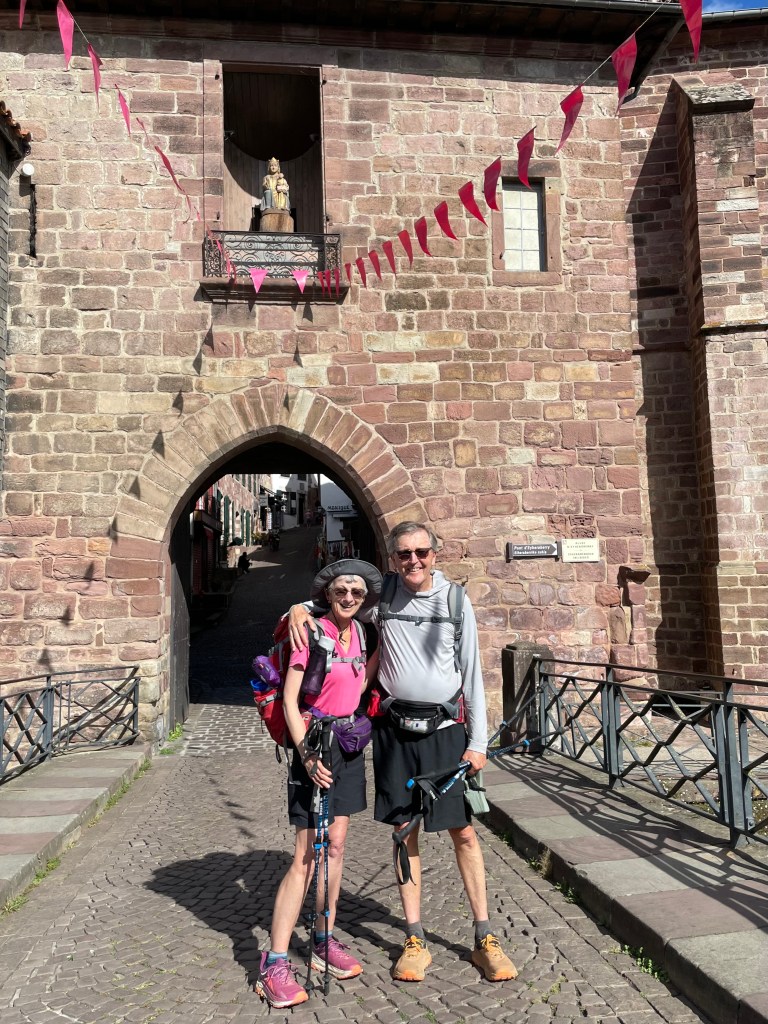
Surreal. Over glasses of wine in Saint Jean Pied-du-Port on Monday afternoon, Sue and I were proud of what we had accomplished on the French Camino, but numb about what it all meant. Just another distance trek? No, it was more than that.
The guidebooks told us we had walked nearly 500 miles over 39 days on the French Camino. GPS, which also recorded our diversions, said our feet had traveled 672 miles. We had climbed 56,178 feet.
If we had stayed in Oregon, we could have walked from Ashland to Portland and back, with miles to spare. Crazy to think about, for sure.
Sit back for a bit while I wrap up what just happened on our Via Podiensis.
“Bonjour!” Said it less than a million times (maybe more, though).
Steps. More than a million each.
How tough was it? I would rate the French Camino much more difficult than the Camino Frances in Spain. Lots of steep climbs and descents on tough terrain here. Not as steep nor tough as the John Muir Trail in California or the Tour du Mont Blanc, though.
How many baguettes? In France, they are part of every meal. I figure I ate more than 100 feet of them, with butter and jam or with ham and cheese. Plain at dinner. Sue ate considerably less.
Croissants? At least one a day, usually at breakfast. It was a two-croissant morning when chocolate croissants were also in our breakfast basket. Sometimes warm from the oven.
Live concerts. One, outside our hotel, next to our room. The singing was on key every now and then. Sue slept through it.
Bad coffee. The coffee was almost all bland, made from push-button machines with light- or medium-roast beans. We drink French roast at home.
Camaradarie. On the trail, we saw someone we knew almost every day. We met new people on most days and shared a few picnic tables or benches. Enjoyed about ten communal dinners and there was enough English spoken for us to follow conversations. Quick bonding with fellow walkers. As the miles passed, the number of walkers thinned considerably.
Americans? We met six Americans. We also shared time with seven Canadians, five Australians, six folks from Holland, four Germans, two Belgians, three Norwegians, one from Ireland (who became a fast friend), two Swedes, and many, many French people. As young as 20. A few were even older than me!
The food. French food features too much meat, cheese, and sauces for me. Also, I cannot bring myself to eat duck. Our half-board dinners were usually a set menu. Some were good (pizza, pasta, soups, casseroles). Fish was usually good. Sometimes I think we were served leftovers. But it is all about the trail, right?
Paving the way. At least half the path (particularly during the last two weeks) was on pavement, usually narrow farm roads. The hard, hot surface was disappointing for us. The farm roads had light traffic—usually—but most drivers kept the gas pedal pressed down while we sought safety on narrow shoulders. Occasionally, drivers slowed and waved. Youths drove huge farm equipment—fast! A bit of walking alongside busy highways.
Blisters. None! Sue’s first trek blister-free. We credit our Altra Olympus 5 trail runners.
French police. Had dinner with one young officer/walker. Had drinks (they had coffee) with two others, also youthful.
Temperatures. At home, 32 is freezing, but in France it translates to 90, about the high almost every day during our trek. It got to 38 (100). Ever walk in a sauna long distances carrying a pack? I know, I’m whining. We had a few days in the low 20s (70s), including the last three days, closer to normal for September/early October. The upside was that it barely rained enough to wet the trail during our walking days.
Falls. Only one. Me, on the second day. Slipped and fell backwards into a steep bank. Thankfully, there is no video footage of me trying to get upright without falling forward and down the hill.
Nature calls. Trailside facilities were frequent at the beginning, but Sue dashed behind many bushes the past couple of weeks.
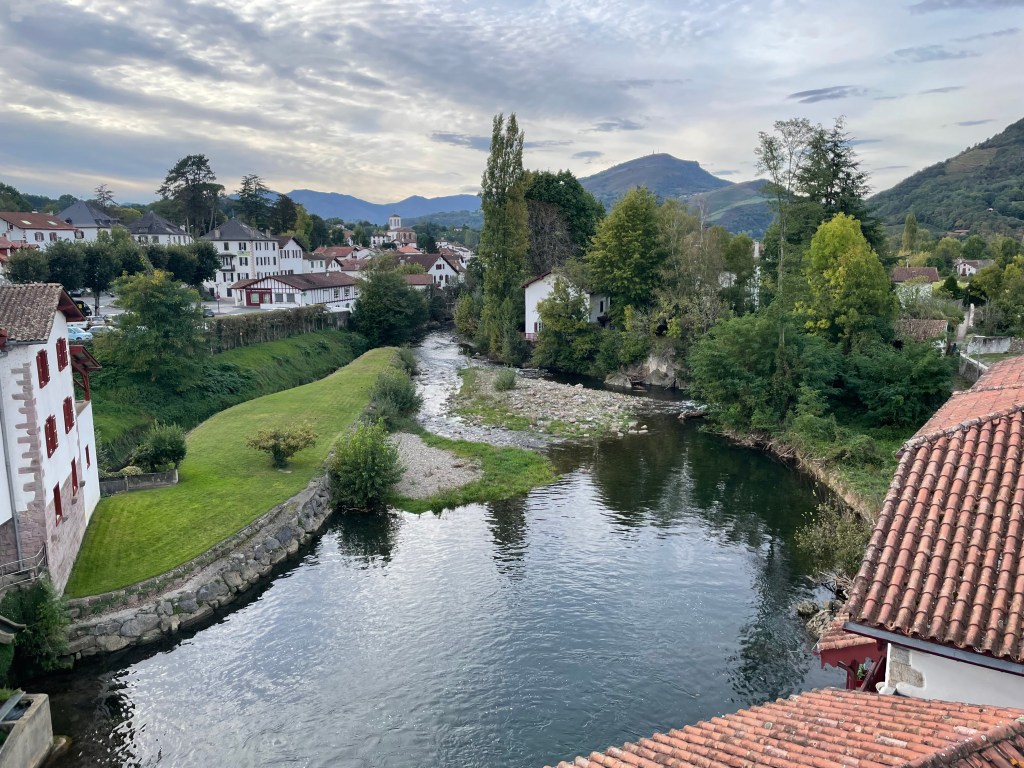
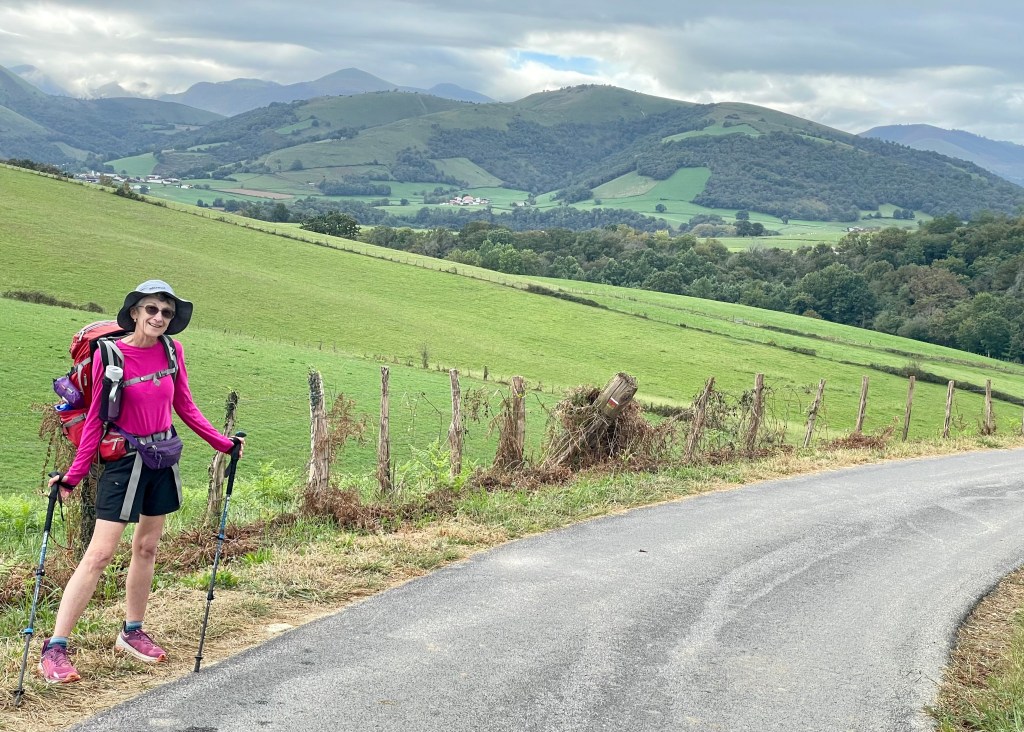
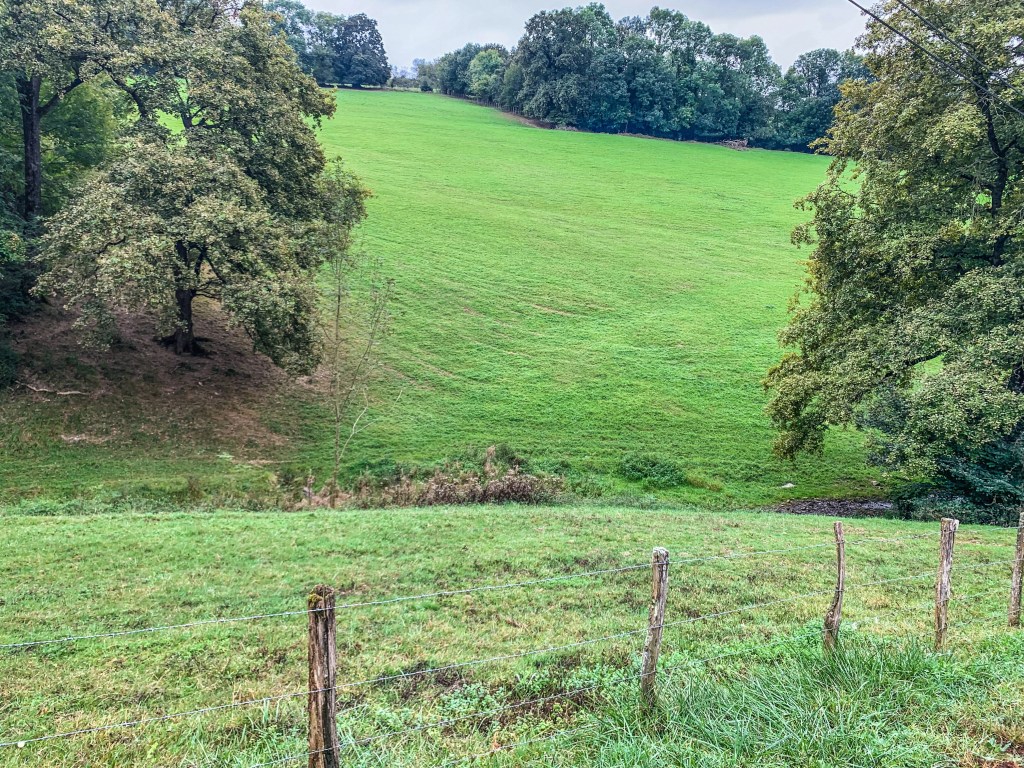
Southern France. As we walked through Basque country, we were gobsmacked at the lush green hills and mountains, which reminded us of the Scottish Highlands. How does it stay so green with the lack of rain? And as we got closer to Spain, the Pyrenees Mountains loomed ahead. Stunning!
Wine and beer. Far less expensive in France. House wine is good (really) and about $2.50-$4 a glass. A carafe is about $7. Draft beer is $4 to $5 a pint. Also, food in markets is cheaper here, a lot cheaper than in Oregon. Produce is much higher quality than we get at home.
Tips. Virtually no tipping here. We tipped a couple times (5-10 percent) for special service.
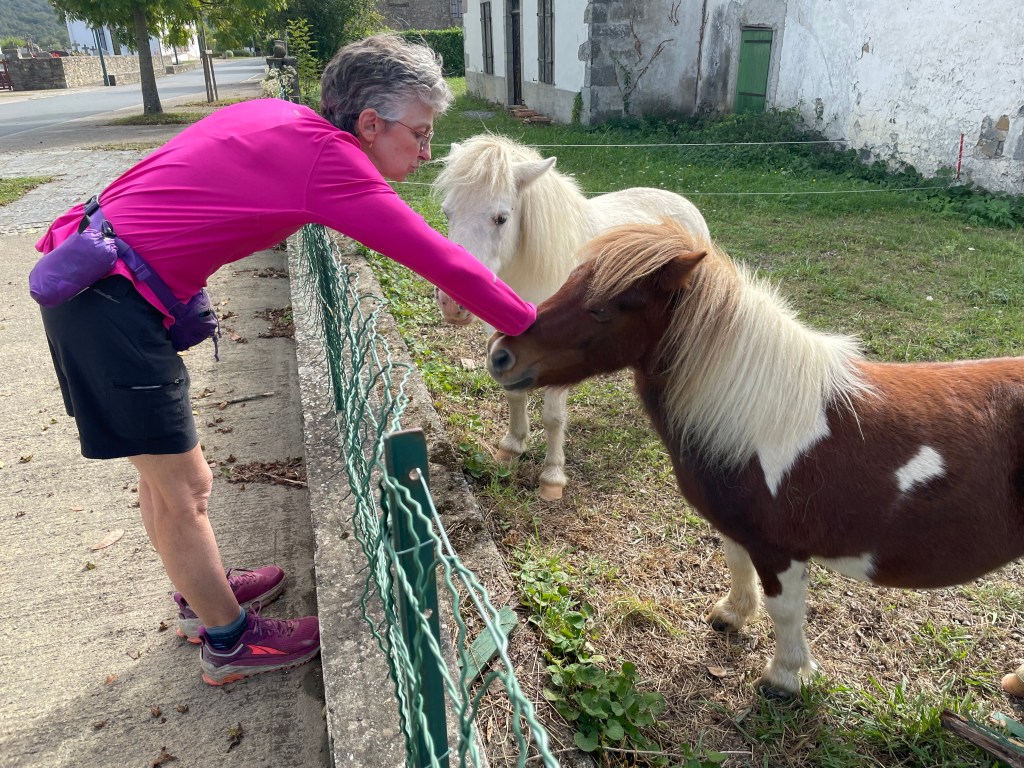
Trailside sights and smells. Gorgeous countryside, rugged mountains (we walked between 3,000 and 4,500 feet) during the first two weeks. Charming villages, some not so charming. The buildings were newer as we walked south. Dense forests as well as cattle, chicken, horse, and sheep ranches. Also plenty of sheep, horse, and cattle droppings on the path. Vineyards, sunflowers, and cornfields toward the end. Beans and even cantaloupe. Smells? Lots of poo odor from the stock animals. Occasional yummy cooking wafts as we passed close to open windows.
Our homes. We stayed in one hostel, one convent, several bed-and-breakfasts, and mostly two-star (a few three-star) hotels. We were the only guests at least twice. Most were comfy, several extra-comfy. It is just a trek, though, and we didn’t have to carry a tent.
Quiet. Most villages were eerily quiet as we walked through. Shutters were closed, nearly no one about. The exceptions were children’s voices as we passed schools. It was often noisier in the countryside. Cows, sheep, chickens talking or ringing the bells hanging from their necks (not the chickens, though). A few sounds from their other ends. And the hum and grind of farm equipment.
Was it fun? For me, I feel a satisfying inner sense of accomplishment after finishing the French Camino. I am not as strong as Sue on the steep climbs and I may whine now and then about them, but I don’t quit. Whether 71 or 21 years old, I know this adventure was a special challenge. I think Sue feels the same way. And we did it!
 Books and my backpack