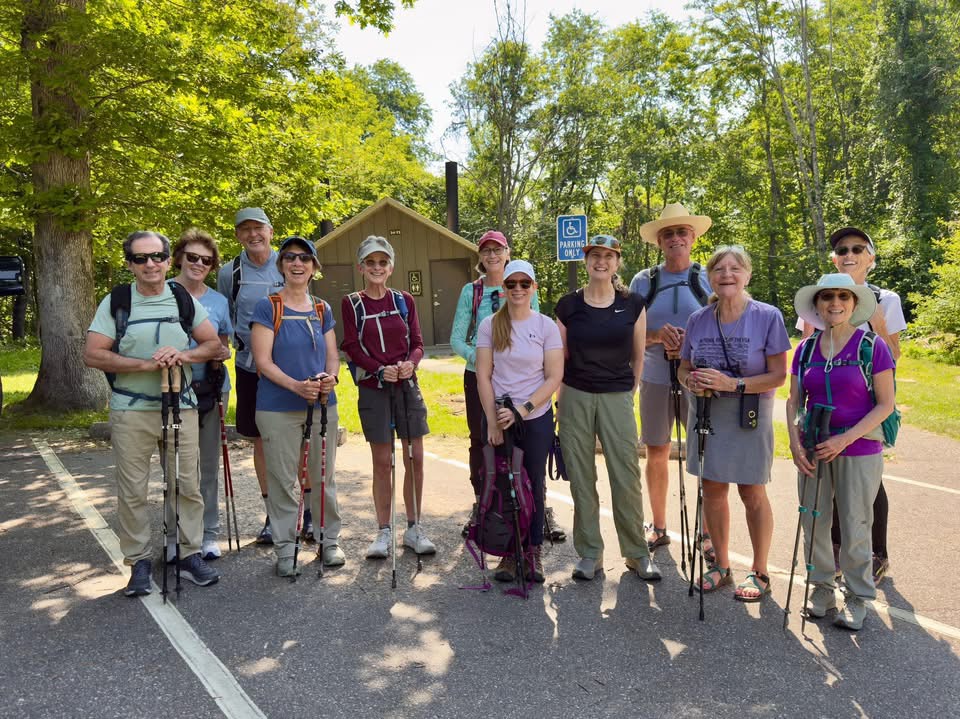
Sue and I were welcomed to Virginia by fellow Camino pilgrims who made us feel at home Sunday. Actually, Staunton, Virginia is our new home and we are so happy that the local Shenandoah Valley chapter of American Pilgrims on the Camino offers monthly hikes and much more. We enjoyed many good times with the Southern Oregon chapter when we lived in Ashland.
Sunday’s walk to South River Falls led us in the Shenandoah National Park and, for a brief time, on the Appalachian Trail. We are learning that the AT, like the Camino, brings together outdoor enthusiasts who thirst for trail challenges and camaraderie. We look forward to making more connections, especially if they include delicious after-hike meals like we had Sunday at the Big Meadows Lodge next to the park visitor center off Skyline Drive. Save room for the blueberry pie!
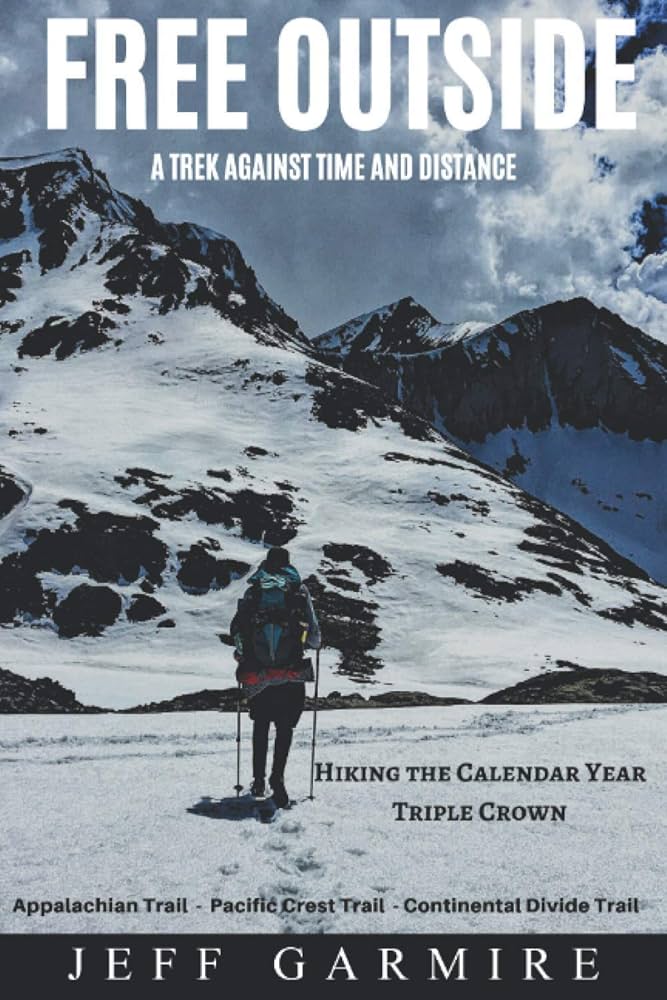
As you begin Free Outside, prepare for a story about one of America’s greatest trekking accomplishments.
In 2016, Jeff Garmire, 25, set out to become the youngest person to complete the 8,000-mile Triple Crown of distance trekking in a calendar year, a feat accomplished only four times before.
Remarkably, he never skipped sections to take advantage of better weather by returning to the skipped parts later. He stayed on each trail through its end. His first was the 2,190-mile Appalachian Trail. As he neared the end in Maine, after miles and miles in deep snow, he faced a raging river. He was not about to give up his quest, so he stripped naked and plunged in.
He describes his ordeal:
”The current grabbed hold, moving quicker than my mind could think…I screamed in desperation and my body lost all sensation. I moved motionless downstream, strapped to a 30-pound pack. I was helpless.”
I became increasingly drawn to his narrative as he describes his next challenge, the Pacific Crest Trail, 2,650 miles, northbound. It was his favorite path and he writes that the snowy 200 miles through the Sierra Nevada was the most beautiful section of the Crown. He averaged 33 miles a day; his longest in one day was 52 miles in California.
The 3,100-mile Continental Divide Trail, the least traveled of the three, gave him challenges that would bring mortals to their knees as he walked southbound from Montana’s border with Canada to New Mexico and the Mexican border. He often had to drink from water sources that cattle had used for their bathrooms. His filter left the water brown, tasting like you-know-what.
How many pairs of trail runners did he go through during the Triple Crown? Thirteen. How many rest (zero) days did he take over 244 days? None.
In a way, the Triple Crown was a beginning. In 2018, Garmire, raised in the Pacific Northwest, became the second person to complete the 6,875-mile Great Western Loop through nine western states on five distance trails, including repeat journeys on the PCT and CDT.
How many miles has he walked on distance trails? More than 30,000.
You may ask why.
It is his antidote for his lifelong battle with depression and his frustration with the routines of the working world. He basks in the simplicity of life with a backpack. He dedicates himself to promoting suicide prevention. He endures pain and hardships that would halt most of us. He thrives on meeting people on the trails, but walks so fast that he soon leaves them behind.
Ultimately, his quests come down to this: Outside, Jeff Garmire feels free.