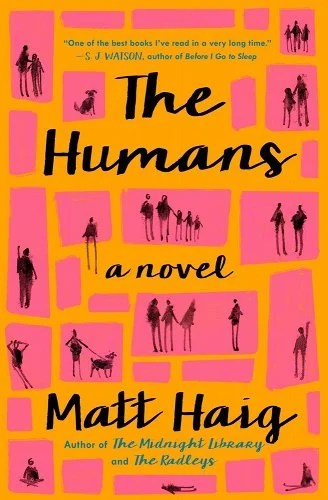
Matt Haig Pens a Comical, Moving Story About an Alien on Earth

Is there intelligent life out there? Are we being watched? Do aliens live amongst us?

In The Humans, Matt Haig answers “yes” to these questions in an intriguing story that explores the best and worst parts of human nature.

The story begins when an alien is sent to Earth to kill Cambridge University mathematics professor Andrew Martin and erase all evidence of his recent discovery, which threatens the Universe. He quickly kills the mathematician, takes his place in Martin’s human form, then moves into his home to carry out the killings of Martin’s wife and 15-year-old son.

His task is not as simple as it seems. His naiveté about proper human behavior, like wearing clothes, leads to hysterical situations in this dark comedy. He has been taught that humans are fallible, not that smart, and lack the powers his kind have back on his planet. And they don’t live forever. While bumbling through his new life, Martin finds a way into the heart of his “son” Gulliver, who had been alienated from his selfish and detached real dad.

The Humans is as moving as it is playful and, in the end, I was drawn to its sentimentality and uplifting theme.

In a note at the end of book, Haig explains that he came up with the story idea in 2000 while in the grips of a panic disorder. Although he wrote other books in the meantime, The Humans is a story he ultimately wanted to tell so he could relate the “weird and often frightening beauty of being human.”

Matt Haig has rocketed to literary success through his children’s books, a memoir (Reasons to Stay Alive), and other novels. His latest novel, How to Stop Time, is being made into a motion picture by actor/producer Benedict Cumberbatch. I will soon post my review of that book.

The Humans is one of the best books I have read in 2023.
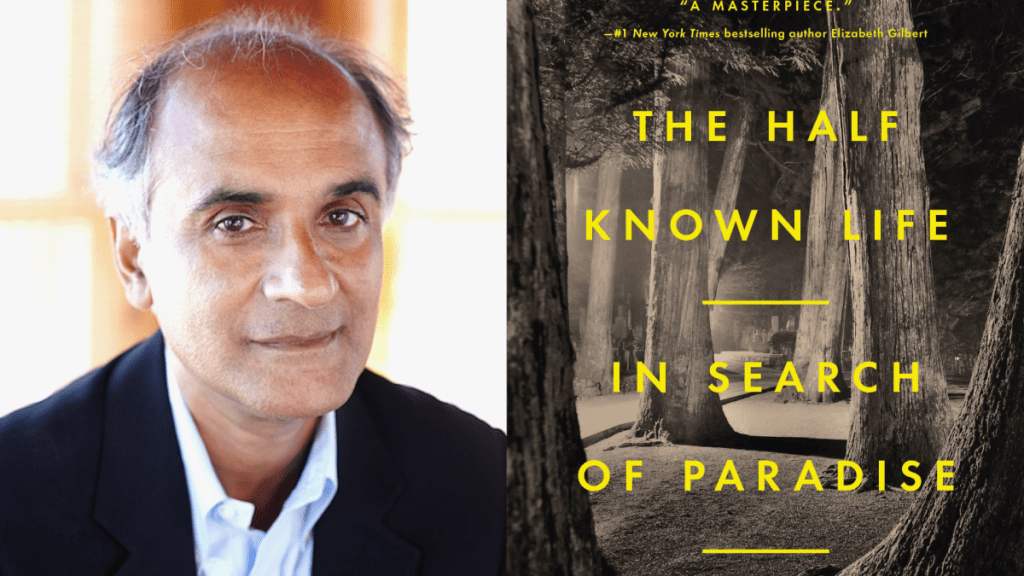
Pico Iyer Leads Journey to Places Beyond and Within

Pico Iyer is a travel writer unlike any other. In The Half Known Life: In Search of Paradise, Iyer takes readers to cultures, even during times of unrest, in fascinating ways that will make you sometimes squirm with discomfort for his lifestyle on the road. The author of more than a dozen books and a well-known TED talks presenter, Iyer transports readers of The Half Known Life to North Korea, Sri Lanka, Iran, Ethiopia, Jerusalem, inner Australia, Nazareth, Kashmir, and Varanasi.

Iyer, who has known the Dalai Lama for three decades, explores how peoples around the world live and seek paradise. His conclusions evolve as he maintains an open mind, even during violent times.

He learns at every stop. Some of his observations:

  1. Paradise has to be accessible to all, so one religion or people cannot define it.
  2. We must all die, so we must live well.
  3. Does our search for paradise “aggravate our differences?”
  4. In North Korea, he seeks to find out “what a whole nation built around a secular faith might look like.”
  5. The places we avoid may be closer to us than the places we seek out.
  6. Paradise exists in the present. He says the Dalai Lama believes “the meaning of life lies in what we can do right now.”
  7. “The churning current of Varanasi threw everything and its opposite together, and declared it holy.”
  8. He quotes Thomas Merton, who explored the extremes of Sri Lanka. “The more you try to avoid suffering, the more you suffer.”

I was fortunate to have known Pico Iyer’s late father while I was a student at the University of California at Santa Barbara in the 1970s. I took three classes taught by Raghavan Iyer: a political philosophy course, anarchist thought, and one about the life and philosophy of Mahatma Gandhi. Iyer was unlike any teacher I have known and his lectures drew standing ovations every single time. The hundreds of us who packed the lecture halls knew we were in the presence of a great thinker. He used no notes and spoke more eloquently than anyone I have ever heard.

But, like his son, Dr. Iyer eschewed pedestals. Both men wanted their words to resonate and enrich our lives. At UCSB, I often wished I could push the repeat button after Iyer’s classes. After I finished The Half Known Life, I returned to page one and read the book again.