

Kelly Floro was 23 when she quit a life many dream about to spend six months on the Appalachian Trail.
“Good thing I was such an idiot,” she writes in a post on The Trek website.
(There are ads on the post.)
Kelly Floro was 23 when she quit a life many dream about to spend six months on the Appalachian Trail.
“Good thing I was such an idiot,” she writes in a post on The Trek website.
(There are ads on the post.)
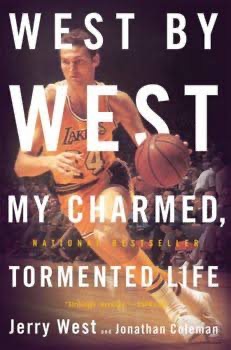
I sat in the bleachers, next to the basket, at Loyola Marymount University’s gym. It was 1970 and Wilt Chamberlain, Elgin Baylor, Pat Riley and the rest of the Los Angeles Lakers gathered for preseason practice at the coastal California campus. Chamberlain took a breather near the baseline, just a few feet from me. He looked even bigger in person; I remember thinking his biceps were larger than most thighs.
A tap on my shoulder. “Reg, he’s ready for you.” It was the Lakers’ public relations guy. “He’ll meet you in the lobby,” he said, pointing to the doors at the opposite end of the gym.
It has been 54 years, but it feels like yesterday. I pushed the door open and there he was, my hero, and I was suddenly, surprisingly, overwhelmed. My hands shook as I held my reporter’s notebook and pen.
“I am glad to meet you,” Jerry West said as he reached out to shake my hand. His eyes were directed at mine, as they were during our entire interview. “I hear you are off to college soon. Congratulations.”
Of all the athletes I interviewed as a teen-aged journalist at the Oxnard Press-Courier, Jerry West was the kindest. But after reading his autobiography, I know that Jerry West was not kind to himself. Like other Lakers’ fans, I was saddened to hear about his death June 12, 2024, at 86.
While I read West by West: My Charmed, Tormented Life, I learned that Jerry West suffered physical abuse at the hands of his father and was crushed when his older brother David died in the Korean War. Depression was an even greater nemesis than the Boston Celtics, which beat his Lakers over and over with the NBA championship on the line.
It turned out Jerry West was much better at fending off pesky defenders than the ghosts that haunted him his entire life.
Basketball fans will be drawn to his revealing anecdotes about other superstars who he observed during his 40 years as a player, coach, and general manager with the Lakers. The shy, private left-handed shooting guard was nicknamed “Mr. Clutch” by Lakers’ broadcaster Chick Hearn for his late-game heroics, none bigger than his last-second, half-court shot that sent an NBA championship game into overtime.
Author Jonathan Coleman helped West with interviews for the book, which includes extensive words from players and other sports figures. Many credit the West Virginian with his efforts to make others feel special. If only he could have found a way to be more satisfied with his own talents and who he was.
At times, West by West was hard for me to read. He shared his regrets for not allowing others—even his own children—to get close to him. However, for 15 minutes many years ago, he made me feel like an old friend.
 Books and my backpack