
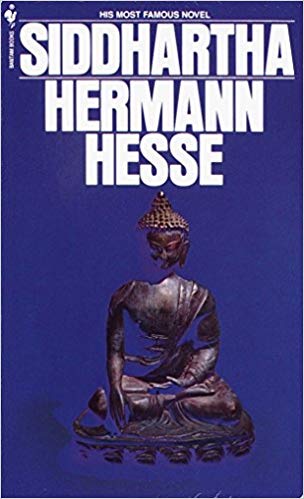
Siddhartha is a handsome young Brahman who is wealthy, exceptionally intelligent, and loved. He seems to have it all, but he feels unfulfilled.
With his loving friend Govinda, he leaves his family and the comforts of home in search of enlightenment. He meets Gautama, but even life with the original Buddha is not enough, so he moves on, leaving Govinda behind. He fasts, lives without possessions, eventually slips back into materialism and a life with a beautiful woman.
As an old man living alone and working as a ferryman at a river, he reconnects with Govinda in a poignant meeting. Is Siddhartha, alas, fulfilled?
Siddhartha is German author’s Hermann Hesse’s most famous book. Hesse, who died in 1962 at 85, so beautifully describes Siddhartha’s journey that many readers return to the book. The conversations with people he meets are compelling and the narrative, originally written in German, is deeply human.
Each time I read Siddhartha, I find myself reading passages over and over. It resonated with me as a youth in the 1960s and it touches me as a man now in my late 60s. Messages of hope and beauty emerge from the book’s shadows.
Siddhartha mirrors aspects of Hesse’s own life of discontent. The author suffered depression as a child, attended a seminary, where he rebelled and fled. He attempted suicide at 15.
I devoured all of Hesse’s novels while I was in college in the early 1970s. Siddhartha was my favorite, but I was also drawn to Narcissus and Goldmund and Peter Camenzind. Click on the book cover above to go to Amazon.
Is there a Siddhartha in all of us?

 Books and my backpack